Power surges can happen in an instant, but the damage they cause can be expensive.
Most homeowners think of lightning when they hear “power surge,” but surges can come from several sources, including changes in electrical demand, utility-related events, and equipment cycling on and off inside the home.
With today's homes relying on everything from smart TVs and computers to HVAC equipment and connected appliances, there is more electronics to protect than ever before.
That is where whole-home surge protection comes in.
What Is Whole-Home Surge Protection?
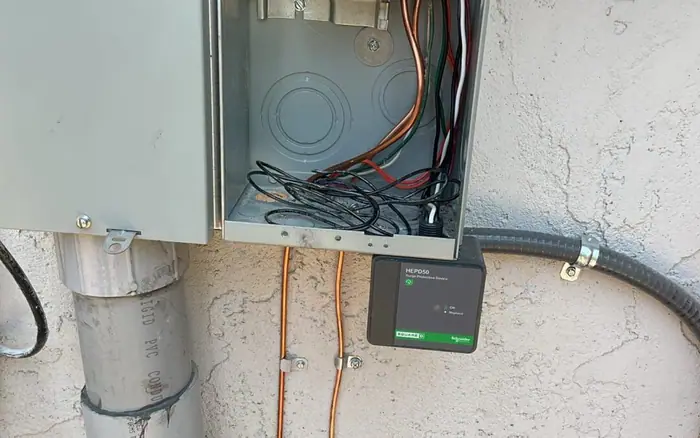
A whole-home surge protector, also called a surge protective device or SPD, is installed at or near your home's electrical panel. Its purpose is to help limit excess voltage before it reaches electrical equipment throughout the home.
Think of it as another layer of protection for your electrical system.
When a voltage spike occurs, the surge protective device helps divert excess energy away from the circuits and equipment it is designed to protect.
Unlike a plug-in power strip that protects only the devices connected to it, whole-home surge protection provides broader protection for the home's electrical system.
What Causes a Power Surge?
Power surges can come from outside or inside your home.
Some common causes include:
- Lightning and severe weather
- Utility switching or electrical disturbances
- Power being restored after an outage
- Large appliances and equipment cycling on and off
- Electrical system issues
Central Texas homeowners are no strangers to thunderstorms and power outages, but weather is only part of the picture.
Smaller electrical surges can also occur within a home's electrical system. While these may not cause obvious damage immediately, repeated electrical disturbances can contribute to wear on sensitive electronics over time.
What Can a Whole-Home Surge Protector Help Protect?
Think about how many items in your home contain sensitive electronic components.
Whole-home surge protection can provide an added layer of protection for equipment such as:
- Televisions
- Computers and home office equipment
- Refrigerators
- Washers and dryers
- HVAC equipment
- Smart home devices
- Gaming systems
- Kitchen appliances
- Other connected electronics and appliances
Even appliances that do not seem particularly high-tech may contain electronic control boards that can be expensive to repair or replace.
A whole-home surge protector cannot guarantee that every device will survive every electrical event, particularly a direct lightning strike. However, it can help reduce the risk of damage from many common voltage surges.
Aren't Power Strips Enough?
Not necessarily.
Some power strips include surge protection, but others are simply extension devices that provide additional outlets. Even quality plug-in surge protectors only protect the equipment connected directly to them.
That leaves many of your home's systems and appliances without the same protection.
Whole-home surge protection works at the electrical panel to provide broader coverage. Plug-in surge protectors can still be useful for particularly sensitive or valuable electronics, creating multiple layers of protection.
Is Whole-Home Surge Protection Worth It in Texas?
For many Texas homeowners, it is worth considering.
Severe thunderstorms, lightning, outages, and fluctuations in electrical service are all realities of living in Central Texas. At the same time, today's homes contain more sensitive electronics than ever before.
Consider the potential cost of replacing or repairing several electronic devices or an appliance control board after a surge. Whole-home surge protection can be a relatively small electrical upgrade compared with the potential cost and inconvenience of widespread electrical damage.
It can be particularly valuable if your home has expensive electronics, smart-home technology, newer appliances, HVAC equipment with electronic controls, or a home office.
Does a Whole-Home Surge Protector Protect Against Lightning?
Whole-home surge protection can help protect against voltage spikes associated with nearby lightning activity, but no surge protective device can guarantee complete protection from a direct lightning strike.
That distinction is important.
Surge protection should be viewed as part of an overall approach to electrical safety rather than a guarantee that electrical damage can never occur.
Proper grounding and bonding of the home's electrical system are also important parts of electrical safety.
How Long Does a Whole-Home Surge Protector Last?
Surge protectors do not necessarily last forever.
Each time a surge protective device absorbs or diverts excess energy, its protective components can experience wear. The lifespan will depend on the device, the electrical environment, and the number and severity of surges it encounters.
Many devices include an indicator that shows whether the unit is still providing protection.
Homeowners should periodically check the manufacturer's recommended inspection and replacement guidelines. A licensed electrician can also inspect the device as part of an electrical service visit.
Can I Install a Whole-Home Surge Protector Myself?
Whole-home surge protection is connected to your home's electrical system, typically at the electrical panel. This is not the same as plugging a surge protector into an outlet.
Working inside an electrical panel can expose you to dangerous energized components, even when individual breakers are turned off.
A licensed electrician can determine the appropriate surge protective device for your electrical system and install it correctly.
Do New Homes Need Surge Protection?
Yes, surge protection can still be beneficial in a newer home.
A modern electrical system does not prevent voltage surges from occurring. In fact, newer homes often contain more electronics, smart appliances, connected devices, and equipment with sensitive control boards.
Surge protection is not only about the age of the electrical system. It is about protecting the equipment connected to it.
Frequently Asked Questions About Whole-Home Surge Protection
Will whole-home surge protection stop my breakers from tripping?
No. Surge protectors and circuit breakers serve different purposes. A breaker helps protect a circuit from conditions such as excessive current, while a surge protective device helps limit transient overvoltage.
If your breakers frequently trip, the cause should be evaluated separately.
Do I still need surge protector power strips?
They can still provide an additional layer of protection for sensitive electronics. Whole-home and point-of-use surge protection can work together rather than being an either-or decision.
Can a whole-home surge protector protect my HVAC system?
A whole-home surge protective device can provide an added layer of protection for equipment connected to your home's electrical system, including HVAC equipment. Depending on the equipment and installation, additional protection may also be recommended.
Is whole-home surge protection only useful during storms?
No. Lightning is one potential source of electrical surges, but voltage disturbances can occur for other reasons as well.
Protect More Than What's Plugged Into a Power Strip
We rely on electricity for nearly everything we do at home. Protecting that electrical system is about more than safeguarding a television or computer. It can also mean protecting appliances, HVAC equipment, smart technology, and other electronics you use every day.
Double L Electrical & Services installs whole-home surge protection for homeowners throughout Williamson County and surrounding Central Texas communities, including Liberty Hill, Leander, Georgetown, Cedar Park, and Round Rock.
If you're wondering whether whole-home surge protection is right for your home, contact Double L Electrical & Services to have your electrical system evaluated and discuss your options.
Wired with Integrity.